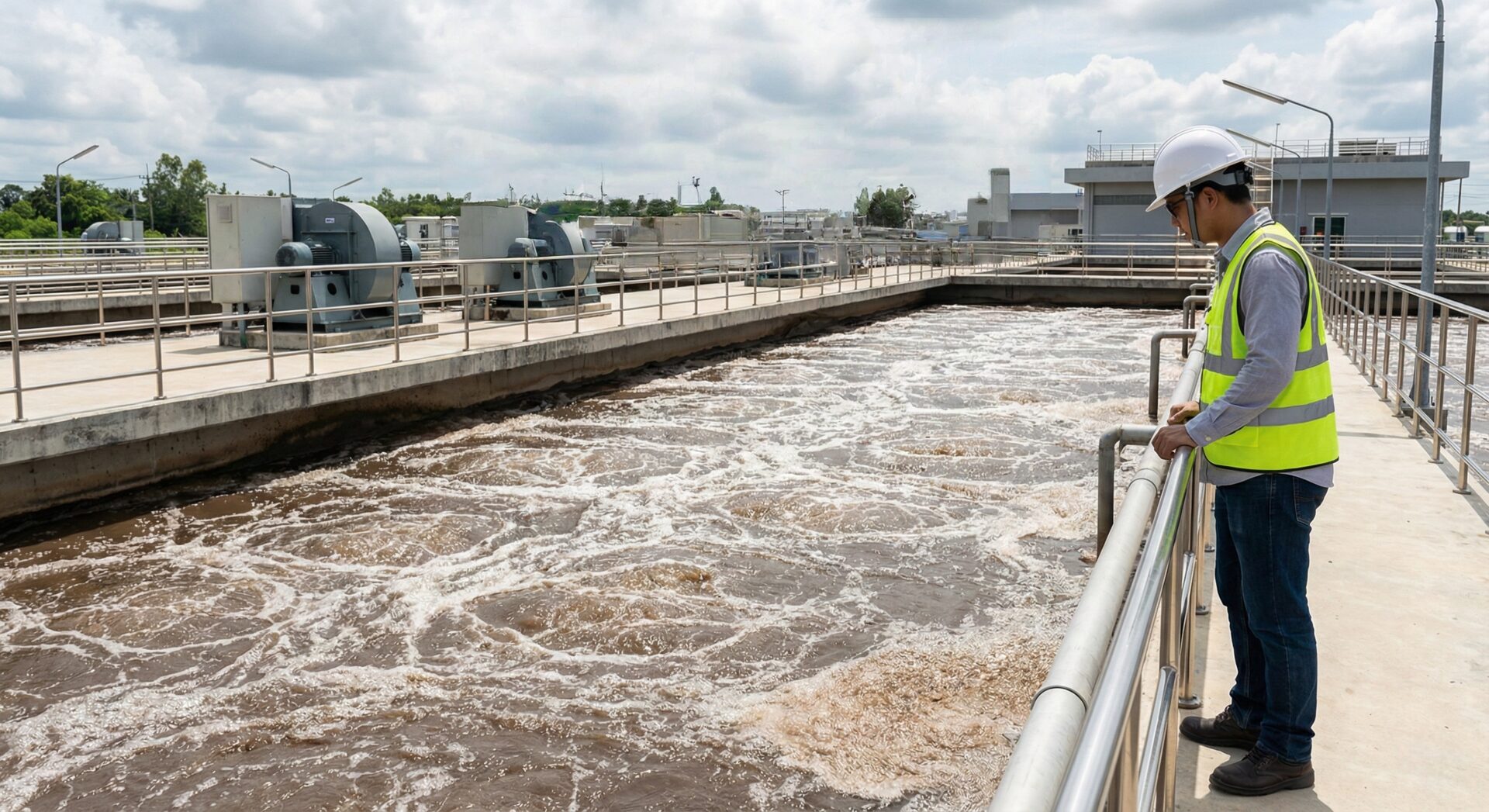
For over a century, the activated sludge process has been the workhorse of global sanitation, preventing disease and protecting aquatic ecosystems. At the heart of this process lies a simple yet profoundly complex mechanism: aeration. While often viewed merely as a mechanical means of introducing air into water, aeration is, in reality, the primary throttle for biological performance in wastewater treatment plants (WWTPs).
The aeration system does not just provide oxygen; it dictates the metabolic pathways of billions of microorganisms, determines the settling characteristics of sludge, influences energy consumption—which typically accounts for 50% to 70% of a plant’s total energy bill—and ultimately defines the quality of the effluent discharged into the environment. In an era of stringent nutrient limits and net-zero energy goals, understanding the intricate relationship between aeration mechanics and biological kinetics is no longer optional; it is the industry standard.
This comprehensive guide delves deep into the physics, biology, and engineering of aeration systems. We will explore how mass transfer occurs, how dissolved oxygen (DO) levels manipulate microbial community structures, the operational challenges of balancing energy versus treatment, and the future of smart aeration control.
1. The Essentials of Aeration: Physics Meets Biology
To understand how aeration controls biological performance, one must first grasp the physical mechanisms at play. Aeration is the process of bringing water and air into close contact to remove dissolved gases (such as carbon dioxide) and to oxidize dissolved metals such as iron, hydrogen sulfide, and volatile organic chemicals (VOCs). However, in the context of biological wastewater treatment, its primary function is oxygen transfer.
The Concept of Mass Transfer
The efficiency of an aeration system is defined by its ability to transfer oxygen from the gas phase (air bubbles or atmospheric air) into the liquid phase (wastewater). This phenomenon is governed by the two-film theory of gas transfer. Oxygen molecules must overcome two primary resistance layers: the gas film and the liquid film at the interface of the bubble.
The rate of this transfer is often described by the equation:
dC/dt = KLa (C* – C)
Where:
- dC/dt is the rate of change of oxygen concentration.
- KLa is the volumetric mass transfer coefficient (a measure of how easily oxygen moves into the water).
- C* is the saturation concentration of oxygen in the water (the maximum amount it can hold).
- C is the current concentration of dissolved oxygen in the water.
The term (C* – C) represents the driving force. The lower the dissolved oxygen in the water, the faster the transfer occurs. This creates a critical operational paradox: to transfer oxygen efficiently, you want low DO levels; but to maintain healthy biology, you often need higher DO levels. Balancing this equation is the daily struggle of every plant operator.
Alpha and Beta Factors
In clean water, oxygen transfer is predictable. In wastewater, it is chaotic. Engineers use correction factors to account for this:
- Alpha (α) Factor: This accounts for impurities in wastewater (surfactants, detergents, fats) that affect the bubble surface. Surfactants can accumulate at the bubble interface, creating a “skin” that hinders oxygen transfer. In raw sewage, the alpha factor can be as low as 0.3 to 0.5, meaning oxygen transfer is only 30-50% as efficient as it would be in tap water.
- Beta (β) Factor: This accounts for the salinity and dissolved solids in the wastewater, which affect the saturation point of oxygen.
Understanding these factors is crucial because they change dynamically. An influx of industrial laundry waste can plummet the alpha factor, causing a sudden drop in DO levels even if the blowers are running at full speed. This directly impacts biological performance, potentially leading to permit violations.
2. Biological Performance: The Engine of Treatment
Biological performance refers to the metabolic efficiency of the microbial community—the “bugs”—that treat the wastewater. These microorganisms use organic matter (pollutants) as food. The aeration system controls this performance by dictating which respiratory enzymes the bacteria use.
The Role of Dissolved Oxygen (DO)
Dissolved Oxygen is the “currency” of the activated sludge process. Its presence or absence triggers different metabolic states:
- Aerobic Conditions (DO > 2.0 mg/L): In the presence of abundant free oxygen, heterotrophic bacteria rapidly oxidize carbonaceous organic matter (BOD/COD) into carbon dioxide and new cell mass. Nitrifying bacteria (Nitrosomonas and Nitrobacter) oxidize ammonia into nitrate. This is the high-energy, high-rate treatment mode.
- Anoxic Conditions (DO < 0.5 mg/L but Nitrate present): When free oxygen is depleted, bacteria turn to chemically bound oxygen found in nitrate (NO3). This process, denitrification, converts nitrate into nitrogen gas (N2), which harmlessly escapes into the atmosphere. This is essential for total nitrogen removal.
- Anaerobic Conditions (No Oxygen, No Nitrate): In the absence of both, distinct groups of bacteria (like Phosphate Accumulating Organisms or PAOs) undergo fermentation. This stress state is actually necessary for Enhanced Biological Phosphorus Removal (EBPR).
The aeration system acts as the switch between these modes. By creating zones of high and low oxygen, or by cycling aeration on and off, operators manipulate the biology to perform complex nutrient removal.
The Nitrogen Cycle Dependency
Nitrification—the conversion of toxic ammonia to nitrate—is exceptionally sensitive to aeration. The bacteria responsible for this, autotrophic nitrifiers, are notoriously fragile. They grow slowly and are poor competitors for oxygen compared to the aggressive carbon-eating heterotrophs.
If the aeration system fails to maintain a residual DO of at least 1.5 to 2.0 mg/L, the heterotrophs will hog all the available oxygen to consume BOD, leaving the nitrifiers to starve. The result is “ammonia breakthrough,” where untreated ammonia passes through to the effluent, potentially killing fish in the receiving waterway.
3. Aeration Technologies and Biological Control
Not all aeration is created equal. The mechanical method of introducing air fundamentally changes the biological environment, primarily through floc structure and mixing energy.
Fine Bubble Diffused Aeration
Currently the industry standard for efficiency, these systems use grids of membrane discs or tubes on the basin floor to release clouds of tiny bubbles (1–3 mm diameter).
Biological Impact: The high surface area of millions of small bubbles provides excellent oxygen transfer efficiency (OTE). However, because they are gentle, they may not provide enough turbulence to shear the biological floc (clumps of bacteria). If the floc becomes too large, oxygen cannot penetrate to the center of the clump, creating anaerobic cores that can breed filamentous bacteria—the arch-nemesis of settling.
Coarse Bubble Aeration
These systems release large bubbles (10–50 mm). They are less efficient at transferring oxygen but excellent at mixing.
Biological Impact: They are often used in grit chambers or sludge holding tanks where mixing is the priority. In activated sludge, they are sometimes preferred for high-strength industrial wastes where the sheer volume of slime would clog fine bubble membranes.
Surface Aerators (Mechanical Agitators)
These large propellers churn the water surface to trap air.
Biological Impact: They create immense shear forces. While this guarantees that oxygen penetrates the floc, it can sometimes shred the floc into “pinpoint floc”—tiny particles that don’t settle well in the clarifier, leading to cloudy effluent. They are, however, robust and resistant to clogging.
4. The Danger Zones: How Aeration Failure Destroys Biology
The aeration system is the life support for the plant. When it fluctuates or fails, the biological consequences are rapid and severe.
The Rise of Filamentous Bacteria
One of the most common issues in wastewater treatment is “bulking sludge,” where the biomass refuses to settle in the clarifier. This is often caused by the overgrowth of filamentous bacteria (long, stringy microbes).
The Aeration Link: Many filamentous species (such as Microthrix parvicella or Type 1701) thrive in low-dissolved oxygen environments. If an aeration system is undersized or poorly distributed, creating “dead zones” in the basin where DO drops below 1.0 mg/L, these filaments will outcompete the healthy floc-forming bacteria. The result is a sludge blanket that expands and washes out of the plant, violating suspended solids permits.
Nocardia Foam
Nocardia forms a thick, brown, chocolate-mousse-like foam on the surface of aeration basins.
The Aeration Link: Nocardia are distinct in that they can utilize hydrophobic substrates (oils and grease) and float on air bubbles. Over-aeration, or the use of fine bubble diffusers in greasy wastewater, can act as a flotation device for these bacteria, concentrating them at the surface where they cause operational nightmares, spilling over walkways and freezing in winter.
Operational Challenge: The “First Flush”
During heavy rainfall, a plant may receive a “first flush” of high organic load followed by dilution. The aeration system must be responsive. If the blowers do not ramp up quickly enough to meet the sudden influx of BOD (biological oxygen demand), the basin turns anaerobic, killing the nitrifiers. Conversely, if the flow is dilute rain water and the blowers keep running at 100%, the basin becomes over-oxygenated. This shear forces the floc apart and wastes massive amounts of electricity.
5. Optimizing System Design for Biological Success
Designing an aeration system is a complex exercise in hydraulic modeling and biological stoichiometry. It requires precise calculation to ensure that the air supply matches the microbial oxygen uptake rate (OUR).
The Critical Calculation
Engineers must determine the Standard Oxygen Transfer Efficiency (SOTE) and then derate it for field conditions. A critical step is sizing the blower correctly. If a blower is oversized, it cannot “turn down” low enough during low-flow periods (like 3 AM), leading to over-aeration. If undersized, it fails during peak loads.
To assist operators and engineers in this critical step, Water and Wastewater offers a specialized tool. You can determine the necessary specifications for your plant using this aeration blower size calculator to ensure your system capacity matches your biological demand.
Tapered Aeration
Biology is not uniform across a treatment basin. At the inlet, where raw sewage enters, the food supply (BOD) is highest, and the bacteria are feasting. The oxygen demand here is massive. As the water flows toward the outlet, the food is consumed, and the bacteria enter a “starvation” or endogenous respiration phase, where oxygen demand drops.
The Solution: Tapered aeration. In this design, the density of diffusers is highest at the front of the tank and gradually decreases toward the end. This matches the oxygen supply to the biological uptake rate, preventing over-aeration at the tail end of the tank which can cause floc shearing and inhibit denitrification in downstream processes.
6. Advanced Control Strategies: DO-to-Ammonia Cascade
The old method of aeration control was a manual setpoint: “Keep DO at 2.0 mg/L.” The modern approach is dynamic, utilizing Ammonia-Based Aeration Control (ABAC).
In ABAC, the aeration system doesn’t just look at Oxygen; it looks at Ammonia.
The Logic: If ammonia levels in the effluent are practically zero, it means the bacteria have done their job. Maintaining high DO at this point is wasteful. The control system automatically lowers the DO setpoint (sometimes down to 0.8 mg/L) to save energy. If an ammonia spike enters the plant, the system detects it and ramps up the DO. This ensures that the biology gets exactly what it needs—no more, no less.
According to research by the Water Environment & Reuse Foundation (WE&RF), implementing ABAC strategies can reduce aeration energy consumption by 10-20% while simultaneously stabilizing biological performance.
7. Real-World Considerations and Operational Challenges
Theory often clashes with reality in the harsh environment of a wastewater plant. Operational drift, aging equipment, and changing influent characteristics pose constant threats to biological stability.
Diffuser Fouling and Biological Back-Pressure
Diffusers do not stay clean. They are prone to fouling from both the outside (biological slime layers) and the inside (dust from intake air or calcium carbonate scaling).
The Impact: As diffusers foul, it takes more pressure to push air through them. This increases back-pressure on the blowers, reducing their output and causing them to overheat. More critically, fouled diffusers produce larger, non-uniform bubbles. This drops the oxygen transfer efficiency. The operator sees the blowers running at 100%, but the DO meter reads 0.5 mg/L, and the biology begins to die. Regular cleaning cycles (often using formic acid or “bumping” the airflow) are essential maintenance protocols.
Temperature Swings
Water temperature dictates microbial metabolism. For every 10°C drop in temperature, bacterial activity roughly halves.
Winter Challenge: In cold months, nitrifying bacteria slow down drastically. To compensate, operators must increase the Mixed Liquor Suspended Solids (MLSS)—essentially keeping more bacteria in the tank. However, more bacteria require more oxygen just to stay alive (endogenous respiration).
Physics Twist: Paradoxically, cold water holds more dissolved oxygen than warm water. This physical advantage helps offset the biological slowdown, but the aeration control system must be tuned to recognize that high DO readings in winter don’t necessarily mean high biological activity.
The Energy-Water Nexus
Aeration is the single largest energy consumer in the water cycle. With rising electricity rates, the pressure to turn down blowers is immense. However, “starving” the process to save money is a false economy. If the biology fails due to lack of oxygen, the plant may face fines for effluent violations that far exceed the energy savings. Furthermore, poor aeration leads to sludge that is difficult to dewater, increasing hauling and disposal costs.
8. The Future: MABR and Granular Sludge
The future of aeration is moving away from bubbles entirely.
Membrane Aerated Biofilm Reactors (MABR)
This technology flips the traditional model. Instead of pushing air bubbles into water, MABR uses gas-permeable membranes that “breathe” oxygen directly into a biofilm growing on the membrane surface.
The Biological Advantage: This allows for simultaneous nitrification and denitrification in the same tank. The biofilm layer closest to the membrane is aerobic (oxidizing ammonia), while the outer layer is anoxic (converting nitrate to nitrogen gas). This achieves incredible biological performance with up to 4x higher energy efficiency than bubble diffusion.
Aerobic Granular Sludge (AGS)
AGS technology cultivates bacteria in dense, fast-settling granules rather than loose floc. These granules are stratified: the core is anaerobic, the middle is anoxic, and the outer shell is aerobic.
The Aeration Role: In AGS systems, aeration is pulsed. The specific hydrodynamic shear created by the air helps shape the granules. It allows a single treatment tank to perform complex nutrient removal without the need for massive internal recycle pumps or separate anoxic zones.
9. Conclusion: The Invisible Heartbeat
Aeration systems are the invisible heartbeat of water and wastewater treatment plants. They are the bridge between the mechanical world of pumps and blowers and the microscopic world of bacteria and enzymes. By increasing dissolved oxygen levels, these systems do not merely “add air”—they actively engineer the ecosystem, selecting for beneficial organisms and suppressing pathogens and nuisance filaments.
For the modern operator or utility manager, the goal is no longer just “keeping the tank mixing.” It is about precision. It is about utilizing data from U.S. Geological Survey studies on water quality, leveraging calculator tools for blower sizing, and implementing AI-driven control strategies. It involves recognizing that every adjustment to a blower setpoint sends a ripple effect through the microbial community.
While the challenges of energy cost, diffuser fouling, and load variability are significant, the evolution of aeration technology continues to provide solutions. From fine bubble membranes to MABR, the industry is moving toward a future where biological performance is optimized not just for compliance, but for sustainability. In the end, effective aeration is what stands between raw sewage and clean water, making it perhaps the most critical industrial process for public health in the modern world.
For further reading on safety protocols and maintenance of these critical systems, resources from the Occupational Safety and Health Administration (OSHA) provide vital guidelines for confined space entry and machinery handling in treatment plants.